

Established 2032
One framework.
A shared future.
Continuity of government. Planetary stability. Unified strategic direction.
The World Senate exercises authority over matters of global and interregional consequence, bringing military coordination, international commerce, infrastructure, monetary policy, and technological oversight within a common governing framework.
Explore the institution →Structure & governance
Representation with continuity.
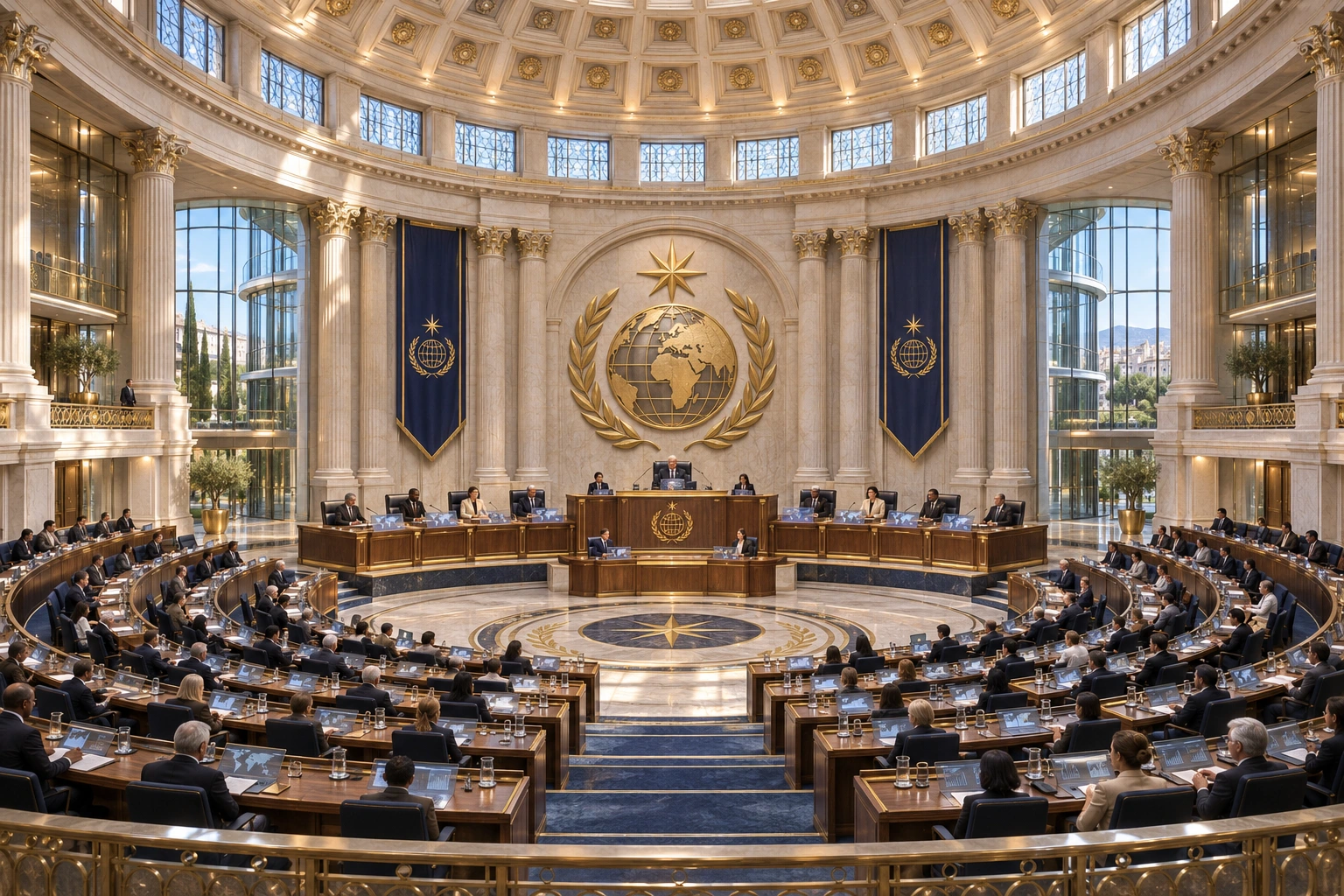
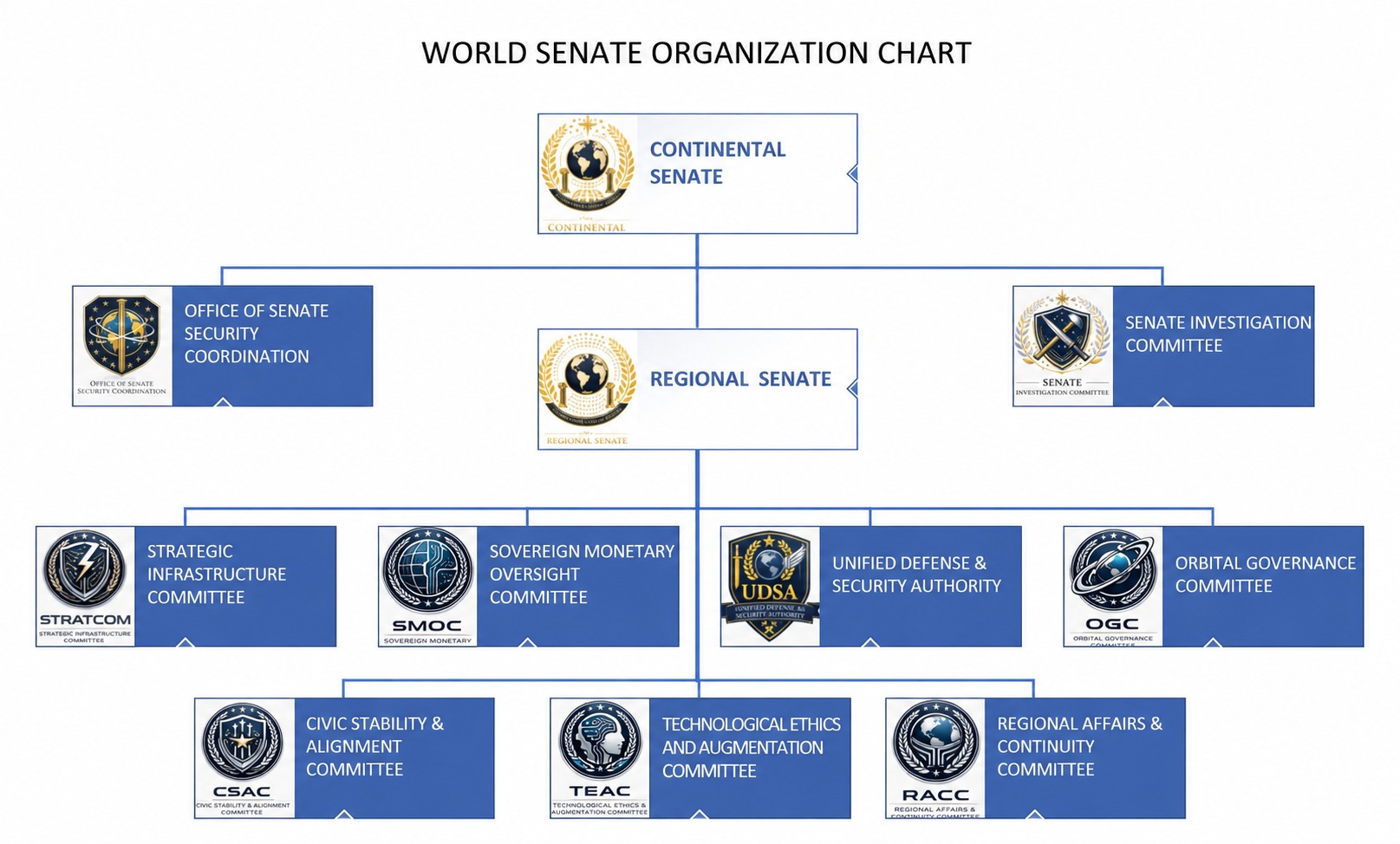
Ten Continental Senators provide strategic direction and oversight across the Senate’s ten Global Regions. Each region is also represented by ten Regional Senators, establishing a combined membership of one hundred ten.
Senators serve lifetime terms, subject to lawful removal. Every five years, the Continental Senators select one of their own to serve as Chairman of the World Senate.
At the Regional level, citizens elect representatives from candidates approved through the Senate’s certification process.
Ratified August 1, 2032
The Founding Charter
“Sovereignty shall henceforth be organized according to a layered system of governance.”
— Article I, Founding Charter of the World Senate
Local and regional administrations retain responsibility for community affairs. Authority over matters affecting multiple regions or the planet as a whole resides with the World Senate.
Local administration
Community law enforcement, local courts, public utilities, education, cultural affairs, and local infrastructure remain under local and regional administration, subject to Senate law.
Global strategic authority
International trade, military coordination, planetary defense, cross-regional infrastructure, global environmental policy, monetary standardization, and interregional legal frameworks fall within Senate jurisdiction.
Technology & public identity
Human realism.
Verifiable identity.
Advanced android systems require a common language of classification. The Synthetic Human Realism Classification Standards define five levels of physical and behavioral realism, alongside requirements for registered synthetic identities.
Classification addresses observable realism. It does not determine sentience, autonomy, intelligence, or legal personhood.
Read the SHRC standards →